Bu proje nedir?
Bir gömülü sistem, tek bir işi en iyi şekilde yapmak için tasarlanmış küçük bir bilgisayardır: bir çamaşır makinesinin, bir drone’un ya da bir akıllı sensörün içindeki “beyin” gibi. Bu projede, farklı mikrodenetleyiciler üzerinde bu beyni programladım.
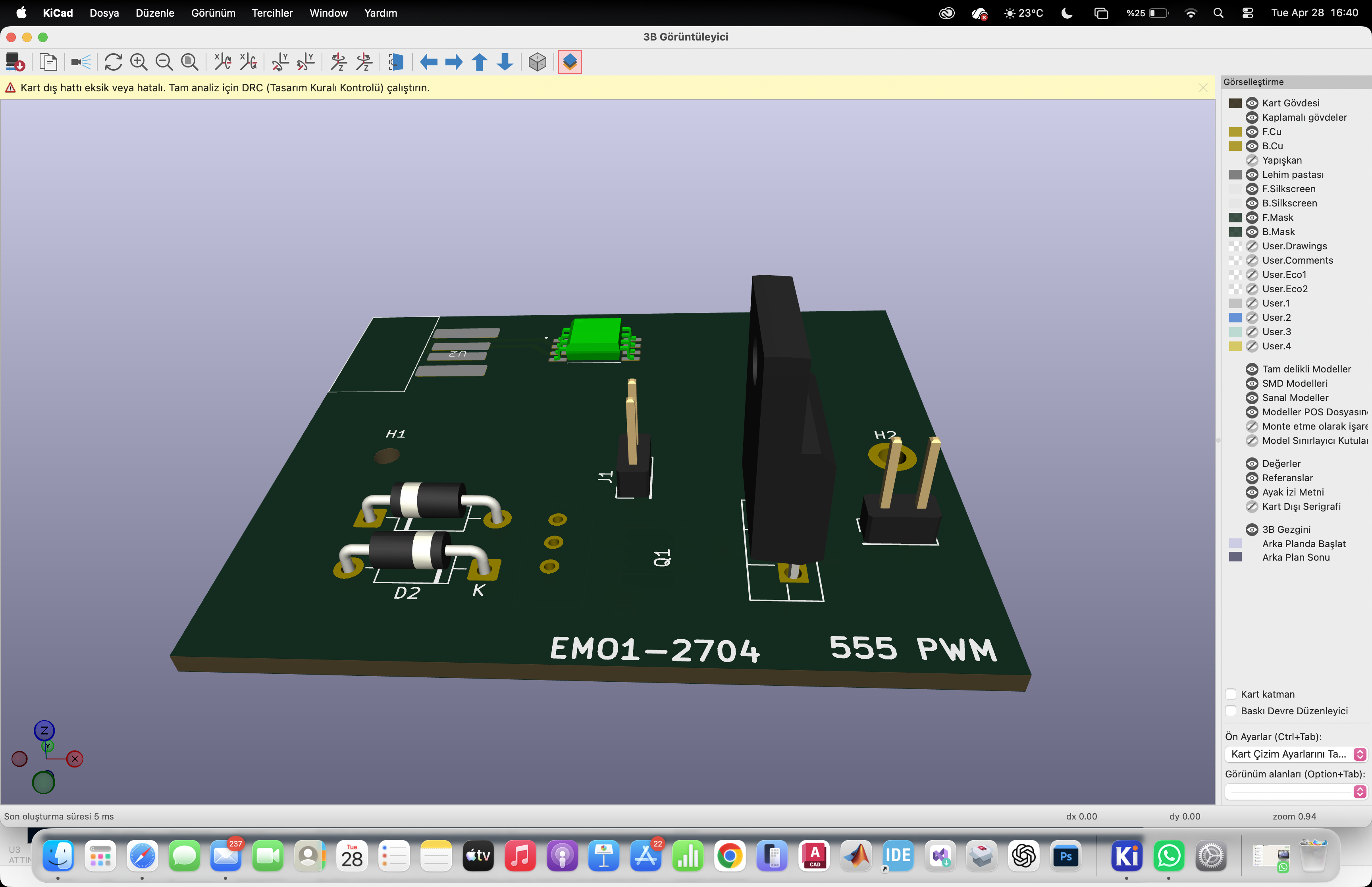
Geliştirdiğim uygulamalar üç temel işi bir araya getiriyor: sensörlerden veri okumak, bu veriyi kablosuz olarak başka bir cihaza göndermek ve gerektiğinde küçük bir kullanıcı arayüzüyle sistemi yönetmek. Tasarımı breadboard’dan alıp KiCad ile gerçek bir PCB’ye taşıdım.
What is it?
An embedded system is a small computer designed to do one job as well as possible: like the “brain” inside a washing machine, a drone or a smart sensor. In this project I programmed that brain on several different microcontrollers.
The applications I built bring three core tasks together: reading data from sensors, sending that data wirelessly to another device, and, when needed, managing the system through a small user interface. I took the design from the breadboard to a real PCB with KiCad.
Sistemin beyni: mikrodenetleyici
Her gömülü sistemin merkezinde bir mikrodenetleyici (MCU) bulunur. Ben üç popüler aileyle çalıştım. STM32, gerçek-zamanlı işler ve düşük güç tüketimi gereken yerlerde çok güçlüdür. ESP32 ise içinde hazır Wi-Fi ve Bluetooth getirir; bağlantılı (IoT) projeler için idealdir. Arduino ise hızlı prototipleme ve öğrenme için en kolay başlangıçtır.
Çoğu zaman en iyi çözüm bunları birleştirmektir: örneğin gerçek-zamanlı kontrolü STM32’ye, kablosuz bağlantıyı ESP32’ye verip ikisini UART/SPI ile konuşturmak.
The brain of the system: the microcontroller
At the center of every embedded system is a microcontroller (MCU). I worked with three popular families. STM32 is very strong where real-time work and low power are needed. ESP32 brings built-in Wi-Fi and Bluetooth, which makes it ideal for connected (IoT) projects. Arduino is the easiest starting point for fast prototyping and learning.
Often the best solution is to combine them: for example giving real-time control to the STM32 and wireless to the ESP32, and letting the two talk over UART/SPI.
Cihazlar nasıl konuşur? UART · SPI · I2C
Bir mikrodenetleyici tek başına pek işe yaramaz; sensörler, ekranlar ve radyo modülleriyle konuşması gerekir. Bunun için üç temel “dil” kullanılır. UART iki cihaz arasında basit, saat sinyalsiz bir hattır. SPI çok hızlıdır ve genelde radyo, hafıza gibi hızlı çevre birimleri için kullanılır. I2C ise sadece iki kabloyla çok sayıda cihazı aynı hatta bağlamayı sağlar.
How do devices talk? UART · SPI · I2C
A microcontroller alone is not very useful; it has to talk to sensors, displays and radio modules. For this, three core “languages” are used. UART is a simple, clock-less link between two devices. SPI is very fast and usually used for quick peripherals like radios and memory. I2C lets you connect many devices on the same bus with just two wires.
Kablosuz: nRF24L01
Projelerimde kablosuz veri aktarımı için nRF24L01 modülünü kullandım. 2.4 GHz bandında çalışır, mikrodenetleyiciye SPI ile bağlanır ve düşük güç tüketimiyle saniyede 2 megabit’e kadar veri taşıyabilir. Bir modül aynı anda altıya kadar başka modülle haberleşebilir.
Bu da onu, Aircraft Tug gibi “bir taraftan komut gönder, diğer tarafta uygula” mantığıyla çalışan uzaktan kontrol projeleri için ideal kılar.
Wireless: the nRF24L01
For wireless data transfer in my projects I used the nRF24L01 module. It works in the 2.4 GHz band, connects to the microcontroller over SPI, and with low power consumption can carry up to 2 megabits per second. One module can communicate with up to six other modules at a time.
This makes it ideal for remote-control projects that work on a “send a command on one side, act on it on the other” logic — like the Aircraft Tug.
PCB ve prototip
Bir devre breadboard üzerinde çalıştıktan sonra, kalıcı ve güvenilir hale gelmesi için bir baskı devre kartına (PCB) taşınır. Tasarımları KiCad ile çizdim: şematikten kart yerleşimine, bağlantı izlerinden lehim adımına kadar. Bu süreç, bir fikrin “masaüstü prototipten” gerçek bir ürüne nasıl dönüştüğünü görmemi sağladı.
PCB and prototype
Once a circuit works on a breadboard, it is moved onto a printed circuit board (PCB) to become permanent and reliable. I drew the designs in KiCad: from schematic to board layout, from connection traces to the soldering step. This process let me see how an idea turns from a “desktop prototype” into a real product.
Üzerinde çalıştıklarım
- STM32, ESP32 ve Arduino üzerinde gömülü uygulama geliştirme.
- Sensörlerden I2C/SPI ile veri okuma ve işleme.
- nRF24L01 ile düşük gecikmeli kablosuz veri aktarımı.
- UART ile arayüz/bilgisayar haberleşmesi.
- KiCad ile şematik ve PCB tasarımı, lehim ve prototipleme.
What I worked on
- Building embedded applications on STM32, ESP32 and Arduino.
- Reading and processing sensor data over I2C/SPI.
- Low-latency wireless data transfer with the nRF24L01.
- Interface/computer communication over UART.
- Schematic and PCB design in KiCad, soldering and prototyping.
Kullanılan teknolojiler
Technologies used
- STM32
- ESP32
- Arduino
- nRF24L01
- UART
- SPI
- I2C
- KiCad
- Embedded C